Food is one of the most confusing topics for people living with psoriasis. Some sources promise miracle diet cures, while others say diet makes no difference at all. In reality, the truth sits somewhere in between. While food does not cause psoriasis or cure it, diet can influence inflammation levels, metabolic stress, and immune signaling over time because psoriasis is an immune-driven inflammatory disease.
If you want a complete medical overview first, start with our guide to psoriasis causes, symptoms, and treatment to understand how immune pathways and triggers interact.
What research and real patient experience consistently show is this: there is no universal psoriasis diet, but there are very clear food patterns. Some foods appear again and again in anti-inflammatory models, while others are repeatedly linked with higher inflammatory burden. The goal is not perfection or restriction. Instead, the real objective is lowering the total inflammatory pressure your immune system deals with daily.
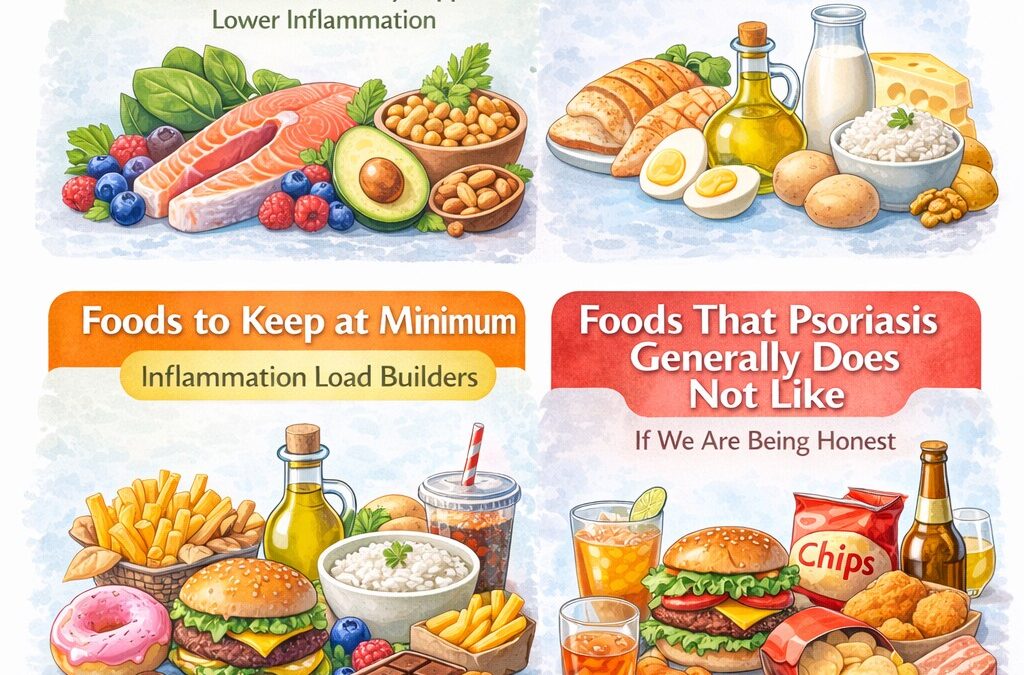
Psoriasis Food Heroes (Foods That Consistently Support Lower Inflammation)
Instead of focusing on miracle superfoods, it is much more useful to focus on dietary patterns that support immune balance over time. Anti-inflammatory and Mediterranean-style eating patterns appear consistently in research connected to immune health, cardiovascular protection, and metabolic balance. These patterns support gut microbiome diversity and reduce pro-inflammatory signaling.
Key foods that most often support anti-inflammatory balance
• Fatty fish (salmon, sardines, mackerel)
• Olive oil
• Nuts and seeds
• Legumes (lentils, chickpeas, beans)
• High-fiber whole grains (oats, quinoa, brown rice)
• Colorful vegetables (leafy greens, peppers, broccoli)
• Berries and antioxidant-rich fruits
Omega-3 fatty acids found in fatty fish may help regulate inflammatory cytokines. In addition, high-fiber plant foods support beneficial gut bacteria that help regulate immune signaling. Furthermore, antioxidant-rich foods help reduce oxidative stress, which is elevated in chronic inflammatory disease.
You can read more about inflammation pathways in psoriasis triggers and flare mechanisms.
Foods You Can Usually Eat Without Overthinking
Not every food needs to be labeled good or bad. Many foods fall into a neutral zone where they are unlikely to strongly influence inflammation unless eaten excessively. For most people, portion size, preparation method, and frequency matter more than the food itself.
Generally neutral foods for most people with psoriasis
• Lean poultry
• Eggs
• Moderate dairy (if tolerated)
• Rice and potatoes
• Simple whole-food carbohydrates
Extremely restrictive diets often fail because they create stress, nutritional imbalance, and social difficulty. A flexible pattern where most meals are anti-inflammatory, while neutral foods appear occasionally, is far more sustainable long term.
Foods to Keep at a Minimum (Inflammation Load Builders)
Certain foods consistently appear in dietary patterns linked to higher systemic inflammation, especially when eaten frequently. These foods often combine multiple inflammatory triggers including refined sugar, unhealthy fats, and ultra-processing.
Common foods linked to higher inflammatory load
• Ultra-processed packaged foods
• High added sugar foods and drinks
• Deep fried foods
• Processed meats
• High trans-fat snack foods
Sugar is particularly important because repeated high sugar intake can increase insulin spikes and inflammatory protein production. As a result, this contributes to chronic low-grade inflammation that may worsen immune-driven disease over time.
Foods That Psoriasis Generally Does Not Like (If We Are Being Honest)
There is no universal banned list. However, certain patterns appear repeatedly in both research and patient flare reports. When these foods become daily habits rather than occasional treats, symptoms often become harder to control.
Foods most often associated with flare-worsening patterns
• Fast food eaten frequently
• High sugar desserts consumed daily
• Heavy alcohol intake
• Highly processed snack foods
• Frequent processed red meat
This is not about perfection. In reality, psoriasis usually responds to long-term patterns rather than single meals.
Weight, Metabolism, and Psoriasis: The Missing Food Conversation
Fat tissue is metabolically active and produces inflammatory signaling molecules that can worsen immune-driven diseases. Patients with higher body fat percentages are more likely to develop psoriasis and often experience more severe symptoms. Even moderate improvements in metabolic health can reduce inflammatory burden and improve treatment response.
This is not about appearance. It is about inflammatory biology.
The Gut–Skin Axis: Why Microbiome Matters
Diet directly influences gut bacteria. For example, diets low in fiber and high in processed food can reduce microbiome diversity and increase inflammatory signaling. In contrast, diets rich in plant fiber, fermented foods, and whole foods support beneficial bacteria that help regulate immune responses.
According to global health data summarized in the World Health Organization psoriasis overview, psoriasis is now recognized as a systemic inflammatory disease influenced by lifestyle and metabolic factors.
The Real Goal: Lowering Total Inflammatory Pressure
Food is not psoriasis treatment. However, it is part of the inflammatory environment that influences disease activity. Therefore, the best results usually happen when diet supports medical therapy rather than replacing it.
When patients shift from “dieting” to “lowering inflammatory load,” the strategy becomes more sustainable and less stressful, which is important because stress itself can trigger psoriasis flares.
FAQs: Food and Psoriasis
Can food cause psoriasis?
No. Psoriasis is immune-driven. However, food can influence inflammation levels.
Is there one best psoriasis diet?
No. Instead, anti-inflammatory dietary patterns show the most consistent benefit.
Should I remove gluten or dairy?
Only if you have sensitivity or medical indication.
Does sugar worsen psoriasis?
High sugar intake is linked with increased inflammatory signaling.
Does weight loss help psoriasis?
Improving metabolic health often improves inflammatory disease control.