Nine Important Facts About Psoriasis You Should Know
Important facts about psoriasis show that this disease is much more than a skin condition. Psoriasis is a chronic immune-mediated inflammatory disease that can affect multiple systems in the body. While most people recognize psoriasis by its red plaques covered with silver-white scale, the disease is actually much more complex and can influence cardiovascular health, metabolism, and mental well-being.
If you are new to the condition, you can first read our complete medical overview of psoriasis causes, symptoms, and treatment options to understand the full disease picture.
Research into psoriasis continues to evolve. However, several core medical facts remain essential for patients, families, and healthcare professionals to understand.
Important Facts About Psoriasis as an Immune and Systemic Disease
Psoriasis is a systemic inflammatory disease that can affect skin, joints, and overall health.
It develops when the immune system mistakenly speeds up skin cell turnover and drives ongoing inflammation. While symptoms are most visible on the skin, psoriasis is now widely recognized as a systemic inflammatory condition associated with metabolic and cardiovascular risk.
Patients with psoriasis have higher rates of:
Hypertension
Type 2 diabetes
Cardiovascular disease
Inflammatory bowel disease
You can learn more about systemic impact in our guide to psoriasis associated conditions.
Genetic and Environmental Factors Both Matter
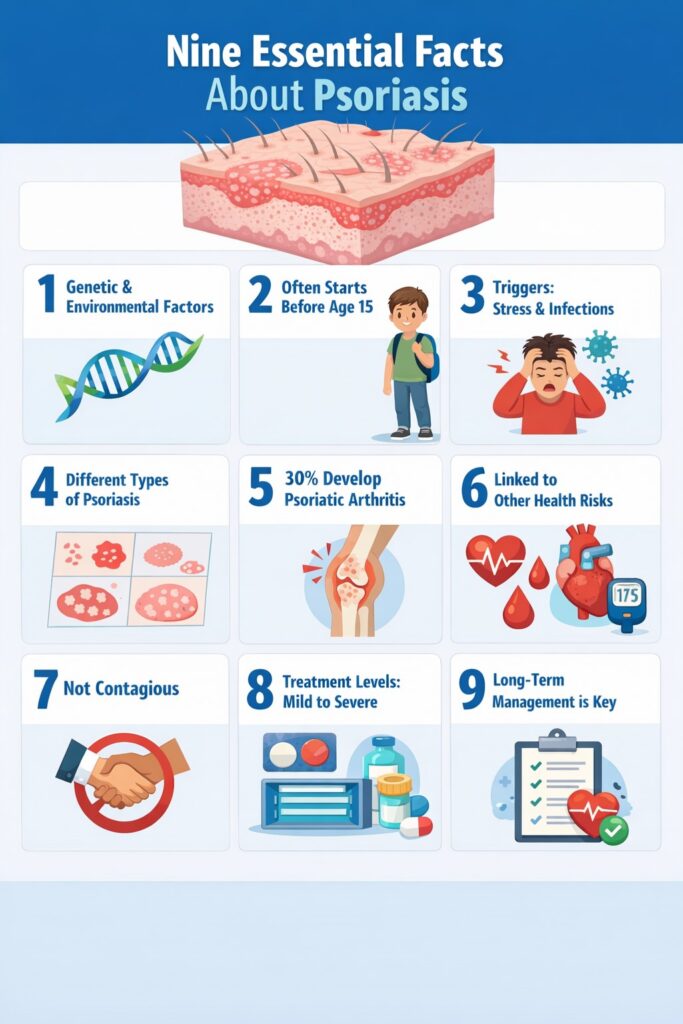
Psoriasis develops through a combination of genetic susceptibility and environmental triggers. Family history increases risk, but external triggers often determine when the disease first appears.
Researchers have identified multiple genetic regions linked to psoriasis, particularly on chromosomes 1, 6, and 17. However, genes alone are usually not enough. Environmental triggers often activate disease expression.
You can explore trigger patterns in detail in psoriasis triggers and flare causes. These important facts about psoriasis help explain why disease development varies between patients and why trigger management is essential.
Psoriasis Often Starts Early in Life
About one third of patients develop psoriasis before age 15. However, the disease can start at any age, including adulthood.
Early onset psoriasis is often linked more strongly to genetic factors. Later onset disease may be more influenced by lifestyle, metabolic factors, and environmental triggers.
Physical Stress and Infections Are Major Triggers
Physical stress, infections, and immune activation are common psoriasis triggers. For example, respiratory infections can trigger guttate psoriasis, especially in younger patients.
Psychological stress also plays a major role in disease flares because stress hormones directly influence immune signaling and inflammation.
There Are Multiple Clinical Types of Psoriasis
Psoriasis appears in several clinical forms:
Plaque psoriasis (most common, 80–90%)
Guttate psoriasis
Pustular psoriasis
Erythrodermic psoriasis
Palmoplantar psoriasis
Psoriatic arthritis
Plaque psoriasis remains the most common form and typically presents with well-defined red plaques and silver scaling.
Psoriatic Arthritis Affects Many Patients
Between 30% and 40% of people with psoriasis develop psoriatic arthritis. This inflammatory joint disease can cause joint pain, swelling, and stiffness.
If untreated, psoriatic arthritis can lead to joint damage. Early recognition is critical.
Learn more in psoriatic arthritis and psoriasis connection.
Important Facts About Psoriasis and Risk of Other Chronic Diseases
Patients with psoriasis have higher risk of:
Obesity
Hypertension
Cardiovascular disease
Depression
Metabolic syndrome
This is largely driven by systemic inflammation. According to the World Health Organization psoriasis overview, psoriasis is now recognized globally as a serious non-communicable disease.
Psoriasis Is Not Contagious
Psoriasis cannot be transmitted through skin contact, blood contact, or environmental exposure. It is purely immune-mediated and genetic in nature.
This remains one of the most important educational points for reducing stigma.
Treatment Depends on Disease Severity
Psoriasis severity is usually measured by percentage of body surface area affected:
Mild: under 3%
Moderate: 3–10%
Severe: over 10%
Treatment may include:
Topical therapy
Phototherapy
Systemic medications
Biologic therapy
Long Term Management Is Essential
There is currently no permanent cure for psoriasis. However, modern treatments allow long-term disease control and improved quality of life.
Successful treatment usually combines:
Medical therapy
Trigger management
Lifestyle optimization
Mental health support
Individualized treatment planning is essential for long-term success. Understanding these important facts about psoriasis helps patients recognize symptoms earlier and seek medical care sooner.
Why Understanding Psoriasis Matters
Understanding psoriasis helps patients recognize symptoms earlier, seek medical care sooner, and avoid long-term complications. As research continues, treatment outcomes continue to improve, giving patients more control over their disease and quality of life.
Frequently Asked Questions About Psoriasis
What is psoriasis and why does it happen?
Psoriasis is a chronic autoimmune inflammatory disease that causes the immune system to speed up skin cell production. As a result, skin cells build up and form red plaques covered with silvery scales. The disease develops through a combination of genetic predisposition and environmental triggers such as infections, stress, or physical trauma.
Is psoriasis contagious?
No, psoriasis is not contagious. It cannot be spread through skin contact, blood contact, or shared environments. The disease is caused by immune system dysfunction and genetic factors, not by bacteria, viruses, or fungi.
Can psoriasis affect parts of the body other than skin?
Yes. Psoriasis is considered a systemic inflammatory disease. In some patients, it can affect joints (psoriatic arthritis) and is associated with higher risk of cardiovascular disease, metabolic syndrome, and inflammatory bowel disease.
What are the most common triggers for psoriasis flares?
Common triggers include stress, infections (especially respiratory infections), skin injury, certain medications, smoking, and alcohol consumption. However, triggers vary from person to person, so identifying individual triggers is important for long term disease control.
Can psoriasis be cured?
There is currently no permanent cure for psoriasis. However, modern treatments can control inflammation, reduce symptoms, and significantly improve quality of life. Many patients achieve long periods without active symptoms when treatment is properly adjusted.