
Psoriasis: A Complete Medical Guide to Causes, Symptoms, and Treatments
Psoriasis is a chronic autoimmune skin condition that affects millions of people worldwide and can impact far more than the skin alone.. It is characterized by an accelerated turnover of skin cells, leading to visible plaques, inflammation, and recurring flare-ups that vary in severity over time. While psoriasis is not contagious, it is a lifelong condition that requires long-term management and individualized care.
This guide explains what psoriasis is, what causes it, how it presents, the different types of psoriasis, and the treatment options currently used to control symptoms and improve quality of life.
What Is Psoriasis?
Psoriasis is a chronic inflammatory skin condition that affects how quickly skin cells renew. In healthy skin, new cells develop and shed gradually over several weeks. In this condition, the immune system accelerates the process, causing new cells to reach the surface too quickly. As a result, thickened patches, redness, and visible scaling develop on the skin.
Instead of the normal skin renewal cycle that takes several weeks, new skin cells may reach the surface within just a few days. This accelerated process leads to the buildup of thickened skin patches, redness, and visible scaling, driven by ongoing inflammation in the body.
What Causes Psoriasis?
Multiple factors contribute to the development of this condition. Genetic predisposition plays an important role, but genes alone do not determine disease onset. The immune system also contributes by triggering ongoing inflammation, while environmental factors often act as triggers that worsen symptoms.
Genetic Factors
Many families see this condition occur across generations, which points to a strong genetic component. People with a family history face a higher risk, although genes alone rarely explain symptom onset. In practice, clinicians often see symptoms emerge when genetic susceptibility combines with external triggers, which highlights the role of genetic and environmental factors involved in psoriasis.
Immune System Dysfunction
The immune system can misfire and activate inflammatory pathways that speed up skin cell growth. As immune signals intensify, skin cells multiply too fast and plaques form more easily. Because inflammation can extend beyond the skin, clinicians increasingly describe this condition as a systemic autoimmune disease with broader health implications.
Environmental Triggers
Even when a genetic predisposition is present, psoriasis symptoms often appear or worsen after exposure to specific external triggers. These triggers may include infections, physical skin injury, psychological stress, certain medications, hormonal changes, and lifestyle factors. Understanding and managing these triggers is an important part of long-term disease control, particularly when stress is involved.
You can learn more about the most common internal and external triggers in our detailed guide on psoriasis triggers and flare up causes.
Psoriasis Symptoms
Symptoms can vary with severity, affected areas, and individual factors. For example, some people notice mild irritation, while others develop thicker plaques and persistent discomfort. However, flare-ups often alternate with periods of improvement. Common symptoms include:
- Red, inflamed patches of skin
- Thick, silvery-white scales
- Dry or cracked skin that may bleed
- Itching, burning, or soreness
- Nail changes such as pitting or discoloration
- Periods of worsening symptoms followed by improvement
Types of Psoriasis
Psoriasis is not a single uniform condition and can present in several distinct clinical forms. These forms differ in appearance, distribution, severity, and frequency, and some people may experience more than one type over time. Understanding the clinical forms of psoriasis and their prevalence helps explain why symptoms and treatment responses can vary widely between individuals.
Plaque Psoriasis
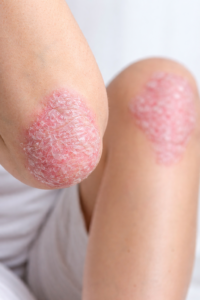
Plaque psoriasis typically appears as red, raised plaques covered with silvery scales, commonly affecting the elbows and knees.
Plaque psoriasis is the most common form of the condition. It appears as raised, red patches of skin covered with silvery-white scales and most commonly affects the elbows, knees, scalp, and lower back.
This form often follows a long-term course with recurring flare-ups. During colder months or stressful periods, symptoms tend to intensify. Consistent treatment and regular skin care help many people maintain control and reduce symptom severity.
Guttate Psoriasis
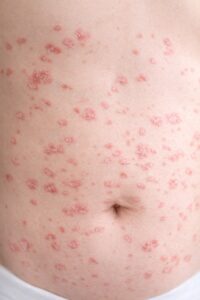
Guttate psoriasis typically appears as multiple small, drop-shaped lesions that develop suddenly, often following an infection.
Guttate psoriasis is characterized by small, drop-shaped lesions that often appear suddenly on the skin. This form is more common in children and young adults and is frequently triggered by bacterial infections such as strep throat.
This type often develops suddenly after an infection. In many individuals, symptoms improve within weeks. However, some later develop a chronic pattern that requires ongoing follow-up.
Inverse Psoriasis
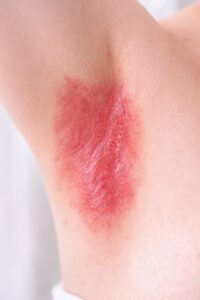
Inverse psoriasis appears in skin folds as smooth, red, inflamed patches without thick scaling.
Inverse psoriasis affects skin folds such as the armpits, groin, and areas under the breasts. The affected skin is typically smooth, red, and shiny, without the thick scaling seen in other forms of the condition.
Moisture and friction frequently worsen symptoms in affected areas. Tight clothing and excessive sweating can increase irritation. As a result, gentle skin care and moisture control play a key role in symptom management.
Pustular Psoriasis
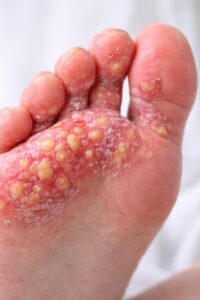
Pustular psoriasis is marked by visible pustules on inflamed skin and may represent a severe form of the disease.
Pustular psoriasis is a less common but potentially serious form marked by white, pus-filled blisters surrounded by inflamed skin. It may be limited to specific areas or involve larger parts of the body and often requires prompt medical evaluation.
Flare-ups may appear quickly and cause noticeable discomfort. Some people experience fatigue or fever during severe episodes. Medical supervision is often necessary to prevent complications.
Erythrodermic Psoriasis
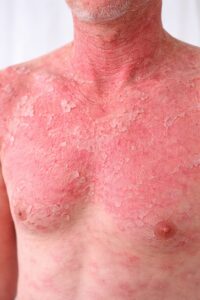
Erythrodermic psoriasis causes extensive redness and scaling and is considered a medical emergency.
Erythrodermic psoriasis is a rare and severe form that can involve most of the body surface. It causes widespread redness, intense scaling, and systemic symptoms and is considered a medical emergency requiring urgent care.
This form disrupts normal skin functions such as temperature and fluid regulation. Because of these risks, doctors often recommend rapid medical intervention. In severe cases, patients require hospital-based care.
How Is Psoriasis Diagnosed?
A qualified healthcare professional usually diagnoses the condition through a clinical skin exam. Clinicians look at lesion appearance, distribution, and pattern, and they also consider medical history to confirm the diagnosis.
When the presentation looks atypical, clinicians may order a skin biopsy to rule out similar conditions. They follow established best practices according to established clinical guidelines when they assess severity and screen for joint involvement. Accurate diagnosis then guides treatment decisions and follow-up plans.
Psoriasis Treatment Options
Treatment aims to control symptoms and reduce inflammation over time. Therefore, doctors tailor plans to disease severity, affected areas, and patient response. In many cases, people do best when they combine medical therapies with supportive routines.
Topical Treatments
Clinicians commonly use topical therapies for mild to moderate disease. For example, they prescribe corticosteroids, vitamin D analogs, and retinoids to calm inflammation and slow excessive skin cell turnover. In addition, moisturizers help reduce dryness, scaling, and itch.
Phototherapy
Clinicians use phototherapy to deliver controlled ultraviolet exposure under medical supervision. As a result, many people see reduced plaque thickness and less inflammation over time. In some cases, doctors combine it with natural topical treatments such as naftalan therapy to support overall symptom control.
Systemic Medications
Doctors prescribe systemic medications when symptoms are moderate to severe or when topical therapy is not enough. These medicines act throughout the body to reduce immune overactivity and lower inflammation. As a result, they can improve skin symptoms and, in some cases, related joint complaints.
Biologic Therapies
Biologic therapies target specific immune signals that drive inflammation. Doctors often choose them for more severe cases or after other treatments fail to provide adequate control. Consequently, many patients achieve longer periods of stable symptom control.
Supportive and Complementary Approaches
Supportive approaches can play an important role alongside medical treatment by helping reduce flare frequency and improve overall well-being. Lifestyle measures such as skincare routines, stress reduction, and dietary adjustments are commonly recommended, as the role of nutrition in psoriasis management has gained increasing attention in long-term disease control.
Certain natural therapies have also been evaluated in clinical settings for their effects on both skin symptoms and joint involvement. Research has examined the use of naphthalan oil in the treatment of psoriasis and psoriatic arthritis, particularly in patients with mild to moderate disease and associated joint symptoms.
Living With Psoriasis
Living with a chronic skin condition affects both physical comfort and emotional well-being. Visible symptoms can influence daily activities and social interactions. Long-term care often addresses medical needs alongside psychological support.
Many people experience stress, anxiety, or emotional strain because symptoms can change without warning. Over time, this pressure can worsen inflammation and trigger flares, which reinforces the connection between psoriasis and stress and affects overall quality of life.
However, with appropriate medical care and steady routines, many individuals achieve long periods of symptom control. As a result, they can maintain daily activities and protect long-term well-being.
In practice, effective management depends on education and consistency. For example, many people learn early warning signs and adjust care quickly. Therefore, proactive routines often reduce flare frequency.
In addition, visible skin changes can affect intimacy, confidence, and personal relationships, so quality of life remains an essential part of long-term care.
Support from healthcare professionals, as well as access to reliable medical information, can make a significant difference in long-term disease control. Many individuals benefit from a proactive approach that focuses on prevention, monitoring, and early intervention rather than reactive symptom management alone.
Psoriasis and Long-Term Health Risks
Chronic inflammatory skin conditions are increasingly recognized for their potential impact beyond the skin itself. Persistent inflammation may be associated with a higher risk of developing additional health concerns over time, particularly when the condition is severe or poorly controlled.
Research suggests that long-term systemic inflammation can influence metabolic health, cardiovascular function, and joint involvement. Some individuals may experience musculoskeletal symptoms, fatigue, or reduced physical resilience, especially during prolonged periods of active disease, including cases where joint symptoms develop alongside skin involvement.
Early diagnosis, consistent treatment, and regular medical follow-up play an important role in reducing the risk of long-term complications. Addressing inflammation effectively may help improve not only skin-related symptoms but also overall health outcomes and quality of life.
Frequently Asked Questions
Is psoriasis an autoimmune disease?
Yes. The immune system plays a central role by triggering inflammation and accelerating skin cell turnover.
Is psoriasis contagious?
No. The condition does not spread through touch, shared items, or close contact with others.
Can psoriasis go away on its own?
No permanent cure exists. Symptoms may improve for periods of time, but flare-ups can return and usually require ongoing management.
What triggers psoriasis flare-ups?
Flare-ups can be triggered by a variety of factors, including infections, skin injuries, certain medications, hormonal changes, and lifestyle influences. One of the most commonly reported triggers is stress, as ongoing psychological pressure can intensify inflammation and contribute to more frequent or severe symptom flares.
Is psoriasis curable?
There is currently no cure for psoriasis. However, many effective treatments are available that can control symptoms and significantly improve quality of life.