Psoriasis is a chronic inflammatory skin condition that can cause red, raised, scaly patches and persistent discomfort. For many people, psoriasis is more than a cosmetic issue. It can affect sleep, confidence, daily routines, and overall quality of life. While there is no single cure, the right management plan can make symptoms more predictable and easier to live with.
Medical treatment is often the foundation of psoriasis care, especially for moderate to severe symptoms. But supportive skin care matters too. Specialized cosmetics designed for psoriasis-prone skin can play an important role in reducing dryness, improving comfort, and supporting the skin barrier day to day.
Understanding psoriasis and its impact on the skin
Psoriasis develops when the immune system triggers skin cells to renew faster than normal. Instead of shedding gradually, cells build up and form thickened plaques on the skin’s surface. These areas can feel tight, itchy, tender, and sometimes painful, especially when cracks develop.
Psoriasis often appears on the scalp, elbows, knees, and lower back, but it can occur anywhere, including the hands, feet, nails, and skin folds. Symptoms vary widely. Some people experience occasional mild patches, while others deal with widespread inflammation and frequent flare-ups.
Why specialized cosmetics are important for psoriasis
Healthy skin acts as a barrier. It holds moisture in, keeps irritants out, and helps protect against environmental stress. Psoriasis can weaken that barrier, which is why many people notice their skin becomes more reactive and loses moisture quickly.
Specialized psoriasis-friendly cosmetics are designed to address these exact challenges. They do not replace medical care, but they can improve comfort, support routine maintenance, and reduce some of the everyday irritation that triggers a “flare cycle.”
Hydration and moisturization
Dryness is one of the most common complaints in psoriasis. When skin is dehydrated, plaques often feel tighter, scaling becomes more noticeable, and itching may worsen. Moisturizers designed for psoriasis are typically rich in humectants and barrier-supporting ingredients that keep skin hydrated longer.
Ingredients commonly used for hydration include glycerin, ceramides, and rich emollients such as shea butter. Consistent moisturizing is often one of the simplest steps that can make a real difference in daily comfort.
Soothing and calming support
Itchy, irritated skin can become easily inflamed, especially when scratched. Many cosmetics formulated for psoriasis include ingredients chosen for their soothing effect, such as aloe vera, chamomile, or oatmeal-based extracts.
These products are often used to reduce the sensation of irritation and help the skin feel calmer, especially during dry winter months or stressful periods when flare-ups are more frequent.
Skin barrier protection
When the skin barrier is compromised, external factors can feel more aggressive. Cold air, friction, detergents, and even certain fabrics can trigger discomfort. Occlusive ingredients such as petrolatum or dimethicone form a protective layer over the skin, helping reduce moisture loss and acting as a shield from irritation.
Barrier-focused products are particularly helpful for hands, elbows, knees, and other areas exposed to frequent movement and friction.
Managing scaling and rough texture
Scaling is a hallmark of psoriasis, especially when plaques become thicker. Some specialized products include gentle keratolytic ingredients such as salicylic acid, which can help loosen scale and support smoother texture over time.
This type of product should be used carefully, especially on very sensitive or broken skin. For many people, the best approach is to combine gentle cleansing, consistent moisturization, and exfoliating support only when needed.
Confidence and psychological well-being
Psoriasis can impact self-esteem, especially when lesions appear in visible areas like the scalp, hands, or face. While skin care products cannot “fix” psoriasis, better hydration and improved comfort can make daily life easier and may help some people feel more confident in their appearance.
The goal is not perfection. The goal is feeling more in control.
How to choose cosmetics for psoriasis-prone skin
Not every “sensitive skin” product is automatically suitable for psoriasis. When choosing cosmetics, it helps to prioritize products that are simple, gentle, and designed to support barrier function.
Look for products that are:
fragrance-free or minimally scented
suitable for sensitive skin
tested for tolerance (where possible)
free of harsh alcohols and aggressive essential oils
designed for dry or compromised skin barriers
It’s also smart to patch-test any new product before applying it widely, especially during a flare-up.
Five ingredients often used in psoriasis-friendly skin care
Many cosmetics for psoriasis combine multiple ingredients to address dryness, irritation, and barrier support. Below are five popular options that are often included in psoriasis-friendly formulas.
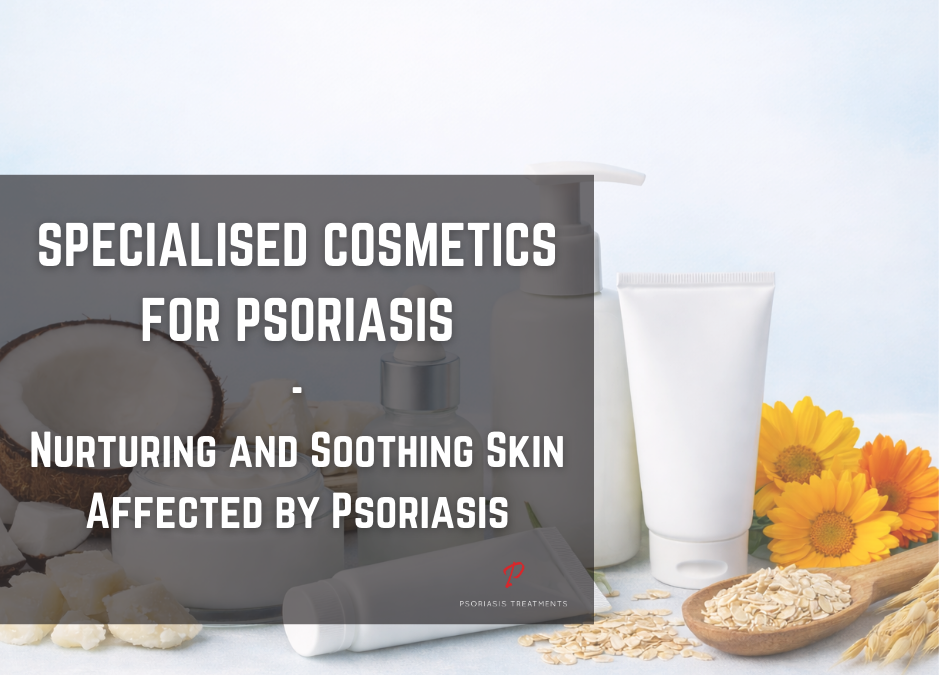
Calendula oil
Calendula, derived from marigold flowers, is widely used in skin care for its soothing properties. It is often chosen for irritated or sensitive skin because it can help support comfort and reduce the feeling of redness and reactivity.
Coconut oil
Coconut oil is a classic option for dry skin because it helps seal in moisture and reduce flaking. Some people enjoy it as a simple body moisturizer, especially after bathing. Because reactions vary from person to person, it’s best to try it on a small area first, particularly if your skin is currently inflamed.
Colloidal oatmeal
Colloidal oatmeal is one of the most well-known ingredients for itch relief and sensitivity. It helps soothe irritation, supports hydration, and forms a protective layer on the skin. Many people with psoriasis also find oatmeal-based formulas helpful after showers or during winter flare-ups.
Shea butter
Shea butter is rich, nourishing, and often used in thicker moisturizers for very dry skin. It helps soften rough areas and improve overall moisture retention. Shea butter is commonly found in body creams designed for dry patches on elbows, knees, and legs.
Jojoba oil
Jojoba oil is lightweight and closely resembles natural skin oils. It absorbs well and can support hydration without leaving an overly greasy feel. Because it’s gentle and balanced, it may work well for people who dislike heavy ointments but still need moisturization.
When to involve a dermatologist
Cosmetic products can be supportive, but psoriasis is still a medical condition, and proper treatment should be guided by a healthcare professional. If symptoms are severe, spreading quickly, affecting the scalp or nails significantly, or interfering with sleep and daily life, a dermatologist can help define the right plan.
In some cases, a doctor may recommend medicated topicals or active treatments, including ingredients like salicylic acid, coal tar, or prescription therapies. The best outcomes typically come from combining medical treatment with consistent supportive skin care.
A realistic takeaway
Specialized cosmetics for psoriasis are not a cure, but they can be a meaningful part of daily management. With the right products, many people experience better hydration, less irritation, smoother texture, and a stronger skin barrier over time. The goal is simple: reduce discomfort, protect your skin, and support long-term stability.