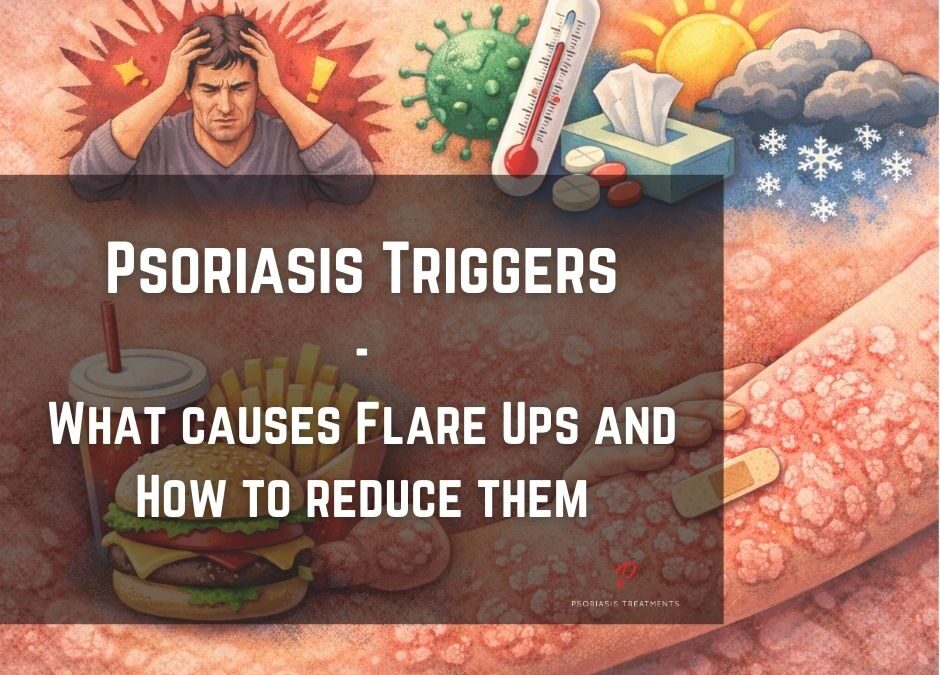
Psoriasis triggers are factors that can cause sudden symptom worsening or flare ups in people living with psoriasis. Psoriasis develops as a chronic immune mediated condition and often follows cycles of remission and flare ups. Many people experience symptom worsening when specific internal or environmental psoriasis triggers activate inflammation and accelerate skin cell turnover.
For example, infections can activate immune pathways that increase inflammation. In addition, emotional stress can worsen symptoms by increasing inflammatory signaling. As a result, psoriasis plaques may appear faster or become more severe. However, trigger patterns vary between individuals. Therefore, identifying personal triggers is one of the most important long term management strategies.
If you are new to the condition, you can first read a full overview in our complete psoriasis guide, which explains how psoriasis develops, how it behaves over time, and why it is considered a systemic inflammatory condition.
Understanding your personal trigger profile is one of the most effective long term strategies for stabilizing symptoms and reducing flare frequency.
What Is a Psoriasis Trigger?
A psoriasis trigger is any factor that activates immune inflammation and leads to worsening plaques, redness, scaling, or itching.
Triggers do not cause psoriasis itself. Genetics and immune system dysregulation drive the disease.. However, triggers often determine when symptoms appear and how severe they become.
If you are unsure whether symptoms are psoriasis or another inflammatory skin condition, understanding the differences explained in psoriasis vs eczema can help you recognize early diagnostic signs and avoid delayed treatment.
Most Common Psoriasis Triggers and Flare Causes

Common external and internal factors that can trigger psoriasis flare ups.
Stress as One of the Most Common Psoriasis Triggers
Stress is one of the most frequently reported triggers. Chronic stress increases inflammatory signaling and can directly worsen autoimmune activity.
Stress management can be an important supportive strategy. Physical activity and mindful movement approaches are often recommended, and some patients benefit from routines such as yoga for psoriasis support.
Infections That Can Trigger Psoriasis Flare Ups
Certain infections can trigger psoriasis onset or worsen existing disease. Streptococcal infections strongly increase the risk of guttate psoriasis, especially in younger individuals.
Respiratory infections and viral illnesses may also temporarily worsen symptoms due to immune activation.
Skin Injury as a Physical Psoriasis Trigger (Koebner Phenomenon)
Skin trauma can trigger psoriasis lesions at injury sites.
Protecting the skin barrier is an important part of prevention. Gentle skincare routines and barrier repair products can help reduce risk, especially when using specialized psoriasis skincare products.
Weather Changes and Environmental Psoriasis Triggers
Cold weather and low humidity commonly worsen psoriasis symptoms.
Some patients improve during summer months. Seasonal nutrition can support inflammatory balance, which is discussed in psoriasis friendly summer nutrition strategies.
Diet and Inflammation Related Psoriasis Triggers
Diet does not directly cause psoriasis, but inflammatory dietary patterns may worsen symptoms. At the same time, multiple triggers can act together and create stronger flare responses. For instance, stress combined with illness or poor sleep can amplify inflammation. Because of this, patients often notice that flare ups appear during periods of overall physical or emotional strain. Most importantly, understanding combined trigger effects helps improve long term disease control.
There is increasing research on systemic inflammation links, including the relationship explored in psoriasis and colon cancer research overview.
Smoking and Alcohol
Smoking increases disease severity and reduces treatment response. Alcohol may worsen inflammation and reduce treatment effectiveness in some individuals.
Why Identifying Triggers Improves Long Term Control
Many patients benefit from combining medical treatment with lifestyle optimization and supportive therapies. Some also explore alternative and complementary psoriasis treatments alongside medical care.
When Treatment Strategy May Need Review
Treatment progression can include advanced regenerative approaches such as stem cell related psoriasis treatment research.
Patients who do not achieve stability locally sometimes explore structured programs in international psoriasis treatment centers.
Managing Triggers in Real Life
Clinical dermatology guidance from the American Academy of Dermatology shows that immune activation, infections, stress, medications, and environmental factors commonly trigger psoriasis flare ups.

Tracking symptoms and working with doctors helps improve long term psoriasis control.
In clinical practice, doctors often help patients identify trigger patterns over time. Meanwhile, lifestyle changes can support medical treatment and improve stability. In contrast, ignoring trigger patterns often leads to more frequent flare cycles. Therefore, long term psoriasis management usually includes both medical therapy and trigger awareness.
Frequently Asked Questions
Can stress alone trigger psoriasis flare ups?
Yes. Stress can increase inflammatory signaling and is one of the most commonly reported triggers among patients.
Can food directly cause psoriasis?
Food does not cause psoriasis, but inflammatory diets may worsen symptoms in some individuals.
Are psoriasis triggers the same for everyone?
No. Trigger patterns vary widely between individuals.
Can removing triggers cure psoriasis?
No. Psoriasis is chronic and immune mediated. However, trigger control can significantly improve disease stability.
How long after a trigger will symptoms appear?
This varies from days to weeks depending on trigger type and immune response.